Australia Cricket Stadium Name – Check your credit score for free and get guaranteed ₹100 cashback. Check your credit score for free and get guaranteed ₹100 cashback.
In the pictures: Australia T20 World Cup 2022 Host Stadiums The ICC Men’s T20 World Cup 2022 returns this month for its eighth edition. Here are the 7 stadiums in Australia where matches will be held.
Australia Cricket Stadium Name

Adelaide Oval, located in Adelaide, South Australia, has hosted cricket matches for over 150 years. This stadium accommodates 53,500 people. (Image: adelaideoval/Facebook)
Brisbane’s Gabba Stadium To Be Demolished And Rebuilt Ahead Of ’32 Summer Games
The Gabba in Queensland is known for its “authentic”, hard, fast and firm pitches, ideal for T20 cricket, the T20 World Cup website said. The stadium can accommodate approximately 42,000 people. (Image: TheGabbaBrisbane/Facebook)
Kardinia Park has over 30,000 people. An hour away from Melbourne, this stadium has hosted several international T20 matches, football friendlies and more.
Bellerive Oval has a capacity of 20,000, making it the second largest stadium in Tasmania by capacity. It is also the only venue in Tasmania that hosts international cricket matches.
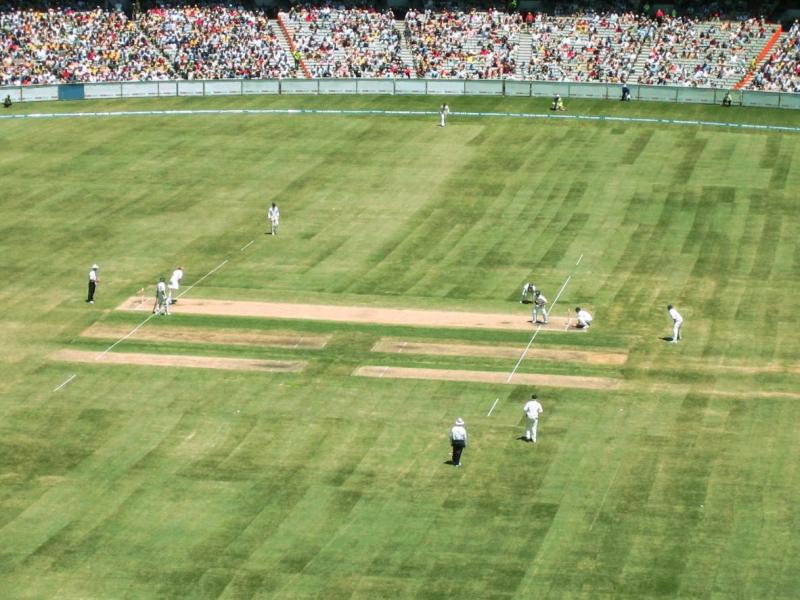
The Melbourne Cricket Ground (MCG) is the largest stadium in the Southern Hemisphere and the 10th largest in the world. It has more than 100,000 people. This historic stadium was built in 1853. (Image: MelbourneCricketGround/Facebook)
Narendra Modi Stadium Capacity, Narendra Modi Stadium Seating Plan For Icc Odi World Cup 2023
Perth Stadium is the third largest in Australia with a capacity of over 60,000. (Image: perthstadium/Facebook)
The Sydney Cricket Ground is a venue steeped in 150 years of history. It has a capacity of 48,000 people and is considered one of the architectural treasures of the country.
Check Free Credit Score at: Easily monitor your credits, get insights and enjoy ₹100 cashback on your first cheque. The Melbourne Cricket Ground (MCG) is probably the largest sports stadium in Australia, with a rich history and a total capacity of 100,000.

The MCG is located in Melbourne’s world-renowned sporting venue, a short walk from Melbourne’s CBD, which also includes Rod Laver Arena, Hisense Arena and AAMI Park. The ground is primarily home to Australian rules football and cricket, but other events such as football, rugby union, rugby league and concerts are also held at the venue.
Australia Vs Pakistan: Etihad Stadium’s Retractable Roof Could Solve 2nd Test Like Rain Interruptions Sports News , Firstpost
The MCG was built in 1853 when the then 15-year-old Melbourne Cricket Ground was forced to move from its former site by the government because the route of Australia’s first steam-powered train was to pass through the oval. Since then, the MCG has seen several major redevelopments, the last of which was completed in 2006. in February. The new North Stand is the 14th stand to be installed at the ground and replaces the existing Ponsford, Members and Olympic stands. With a total capacity of around 55,000, it offers the best facilities and viewing of any stadium in the country.
On the south side of the ground is the famous Great South Stand, which opened in 1992. With a capacity of around 45,000, this structure has set many benchmarks for sports stadium construction in Australia. The stand received a comprehensive upgrade in 2012 to bring the level of equipment on par with that of the North Stand.
Many famous events have been held at the Melbourne Cricket Ground. The most famous of all is the 1956 Olympics, in which the MCG was the main stadium, attracting massive crowds for all events. Athletics has since returned to the stadium for the 2006 Commonwealth Games. Annual AFL Grand Final and Boxing Day Test, 1992 and 2015 Cricket World Cup Finals, FIFA World Cup Qualifiers, Rugby Union Bledisloe Cup, State of Origin Rugby. and soccer during the 2000 Sydney Olympics are other major sporting events taking place at the ground.
The record attendance at the MCG is 121,696 for the 1970 VFL Grand Final between Carlton and Collingwood. The record since the North Stand was rebuilt is 100,021 for the 2017 AFL Grand Final between Richmond and Adelaide. At various stages, the MCG has hosted world record holders from AFL, cricket, rugby league, rugby union and even baseball.
Gabba Likely To Get Naming Rights Sponsor
The total capacity of the MCG is approximately 100,000, consisting of 95,000 seats and 5,000 standing seats. The pitch from the fence is 174 x 149 meters. The ground is illuminated by six huge light towers, while the lights are also installed under the roof of the stadium. The 75 meter high towers were built in 1984 and were first used for the event in February 1985. The MCG was the first Australian stadium to have a color video screen (the first was installed in 1982) and now has two of the largest video screens. screens in the Australian stadium. The two high-definition LED billboards are each 25.24m wide and 13.17m high, or approximately 332 square metres, and were commissioned in December 2013. There is also LED signage on the fence and ground floor, which includes two display boards.
The MCG is approximately 1km from the CBD. A 5 minute walk connects the city to the ground via a new footbridge or by car from Flinders St into the City turn right on Brunton Blvd or Punt Rd.
There are two railway stations near the MCG. Jolimont is to the north of the ground and Richmond to the south-east of the MCG. Tram routes operating near MCG include no. 75, No. 48 and No. 70. Taxi stands are located in front of the Pullman Hotel, Outside Rod Laver Arena and Jolimont Terrace.

Parking is available at Yarra Park, which surrounds the ground, with additional parking in the CBD. Bad weather may affect parking at Yarra Park. Limited access parking is always available.
World’s Biggest Stadium: Know Which One Tops The List
Information about the Melbourne Cricket Ground (MCG), including ground layout, history, archives, events, map, tickets, directions and accommodation. stadium in the Docklands area of Melbourne, Victoria, Australia. Construction began in October 1997 and was completed in 2000 at a cost of A$460 million ($936.42 million in 2023).
) The stadium has a retractable roof and the ground level seats can be converted from an oval to a rectangle.
The stadium is primarily used for Australian rules football and was originally built as a replacement for Waverley Park.
The offices in the area serve as the headquarters of the Australian Football League (AFL), which is the sole owner of vue as of October 2016.
Explained: Why World’s Only Indoor Cricket Stadium In Melbourne Will Not Be Able To Save T20 Wc Final Washout
With a capacity of over 53,000 spectators for the sport, it is the second largest stadium in Melbourne after the Melbourne Cricket Ground. It has hosted a number of other sporting events including domestic Twty20 cricket matches, Melbourne Victory home football matches, rugby league and rugby union matches, as well as special events and concerts. The region is home to the digital broadcast of the Sev network and the NAB affiliate.
Plans for the stadium were announced in October 1996 as a more central replacement for the much larger but aging Waverley Park as the home ground of the Australian Football League.
It was built in Melbourne’s Docklands, a centrally located but largely derelict industrial area just west of the CBD, which had just begun its urban regeneration programme. Construction of the stadium by Boulderstone began in October 1997 under the name “Victoria Stadium”.

And finished by the 2000 AFL season. The stadium was originally developed by the Docklands Stadium Consortium and then overseen by the Sev Network. The remaining lease of the stadium was sold to James Fielding Funds Management in June 2006 for A$330 million.
List Of The Top 10 Biggest Cricket Stadiums In The World
The stadium, like Waverley Park, was built primarily for Australian rules football, unlike other stadiums of similar size in Australia, which were originally designed for cricket and later developed for football. It was the first Australian rules football ground to be built with a retractable roof, which throughout its history was usually closed for night games and wet-weather day games, and occasionally for dry-weather day games. It was the first stadium in Australia to have movable seating. All four 1st tiers of the stadium can be moved in a rectangular shape up to 18 meters forward. Although this is a key design feature of the stadium, it has rarely been used due to damage to the turf, the time it takes to deploy the seats, and the reduced capacity because corner seats are not available in a rectangular configuration.
Construction ended just weeks before the first race, and as a result some scheduled warm-up matches were moved.
The first game played at the ground was between Essendon and Port Adelaide in front of a crowd of 43,012 in 2000. on March 9.
The game was supposed to be played behind closed doors, but due to technical problems, it remained normal. Six days later Barbra Streisand organized vue’s first concert.
What You Need To Know About The Icc Cricket World Cup 2023 Stadiums
The third football on the field
Australia melbourne cricket stadium, lords cricket stadium, australia stadium, cricket stadium melbourne, australia cricket, indoor cricket stadium in australia, australia roof cricket stadium, cricket stadium australia, stadium cricket, lords cricket stadium tour, cricket stadium lights, international cricket stadium in australia