First World Cup India won – Home » Cricket Home » News » 1983 World Cup Victory Anniversary: Meet the Men Behind the Historic Triumph That Changed the Face of Indian Cricket
1983 World Cup Victory Anniversary: Meet the men behind the historic triumph that changed the face of Indian cricket
First World Cup India Won

Indira Gandhi, then Prime Minister, with the Indian cricket team after their historic victory at the 1983 World Cup. (Image: Twitter/Congress)
World Cup Win Anniversary: Meet the Men Behind Historic Triumph That Changed the Face of Indian Cricket
We take a look at the insights and performances of 8 players who stood out during India’s triumphant victory in the tournament.
1983 WC VICTORY ANNIVERSARY: The 1983 WC not only changed the way cricket was perceived and played in India, but it also changed India itself. 39 years ago today, when Kapil Dev lifted the coveted trophy on the Lord’s iconic balcony, he inspired and united a nation of 750 million people, and continues to do so.
We take a look at 8 insights – about the players and performances that stood out in India’s triumphant journey in the tournament.
Kapil Dev’s unbeaten 175 off just 138 deliveries against Zimbabwe at Tunbridge Wells (from 9 for 4 which quickly deteriorated to 17 for 5) was the second highest scoring batting performance in India’s ODI history up to that point (after Rohit Sharma’s world record 264). He absorbed the pressure of wickets falling around him, resurrected the innings and still ended up scoring at a rate well above the match norm.
When India won the first World Cup
Wicket in ODI history. He scored 65.78% of India’s total in the match – this remains the second highest percentage of runs scored by an individual batsman in ODI history after Viv Richards’ 189 (on 272 by West Indies at Manchester 1984).
The Kapil Dev-led team won India’s first World Cup at Lord’s in an all-white jersey. (Image: Twitter/BCCI)
His batting performance was so devastating that his performance with the ball in the match is completely forgotten – Kapil was the most restrictive bowler in the match, conceding just 32 runs in his 11 overs – his efforts went a long way in keeping Zimbabwe’s batsmen under control. and ultimately resulted in a decisive 31-run victory for India.

It’s a trait that defined Kapil’s performance with the ball throughout the tournament – the ability to bowl tight spells and have a high economic impact – basically giving away runs to a subpar match. Defending a paltry 183 against the West Indies in the final, he bowled as many as 4 maidens and kept a tight leash on the batsmen, conceding just 21 runs in his 11 overs.
India out to end Dekade that hurt at home World Cup
He was India’s most economical bowler and had an economy below 3 in four of the 8 matches in the tournament. His economy rate of 2.91 during the tournament was significantly lower than the average rate of 3.74 for all fast bowlers.
As a player, Kapil did not fail even once in the 8 matches he played in the tournament. He was the fifth highest run-scorer, scoring at 108.99 – the second highest (min. 100 runs) in the World Cup after Rod Marsh. He also took 12 wickets.
Added to this was his agility on the field – running back to catch Viv Richards – perhaps the most defining moment in the history of Indian cricket! Add to that his inspirational leadership that took India to a historic victory and Kapil Dev was the first all-rounder of the tournament.
Despite ranking 16th in the Runs Tally and only fourth for India, it was Sandeep Patil who emerged as the most impactful Indian batsman in the 1983 World Cup – according to the Impact Index, a holistic and complete cricket. system that measures a player’s contribution against the contribution of other players in the match, giving context to each performance.
India vs Australia at Ich Men’s Cricket World Cup: A History, Many Firsts and World Records
Three qualities defined Patil’s performance in the World Cup: 1) he came in with useful contributions, often under pressure when the team had lost early wickets, 2) he scored well above the match standard and 3) he raised his level of play in the big matches – the round of 16 – by giving his best when it mattered most.
Patil had a strike rate of 90 in the tournament, which was several notches higher than the average standard (200+ runs) of 66.36. He had the audacity to counter the most feared opposition bowlers – the likes of Roberts, Marshall, Garner, Holding, Willis and Botham to name a few.
He produced a crucial performance in the semi-final against England – 51 off 32 deliveries and supporting acts in the virtual quarter-final against Australia (30 from 25 deliveries) and in the final against the West Indies (27 from 29 deliveries).

Lal was consistently wicketless just once in 8 matches in the tournament and 11 of his 17 wickets were by the opposition’s top batsmen (at positions 1 to 5). Like Patil, he raised his level of play in the big matches – the knockout stages. He returned with 4-20 in 8.2 overs in a do-or-die encounter against Australia at Chelmsford, but his notable performance came in the final. Towards the run-up to the game and as the West Indies ran away with the match, he got rid of Haynes and seven runs later Viv Richards took the wicket, dramatically changing the fortunes of the match. He broke the backbone of the West Indian middle order by seeing Gomes’ back soon after. The momentum has changed. India had the upper hand. The rest is history.
How Many Times India One T20 World Cup? All you need to know
The man of the match in the semi-final and final proved to be the third most impactful player in the tournament, after Kapil Dev and Madan Lal.
Amarnath delivered two superb all-round performances in the two biggest matches of the tournament. In the semi-final in Manchester, he got the crucial wickets of Gower – the leading run-getter in the World Cup, and Gatting, who conceded just 27 runs in his 12 overs before anchoring the chase with 46 off 92 deliveries. At Lord’s he made a patient 26 and then returned with the ball to end a potentially dangerous stand of 43 runs for 7.
Wicket gets wicket from Dujon. He got Marshall soon after before taking the final wicket of Holding to take India to a memorable victory.
However, Amarnath also failed with the bat in 4 of the 8 matches in the tournament – this reduced his overall impact and placed him behind Kapil and Lal. It is therefore not surprising that his bowling impact was only 3% less than his batting impact in the tournament.
ICC Cricket World Cup 2023: How it can help boost India’s economy
Yashpal Sharma was India’s top scorer in 3 major matches of the tournament. He made 89 off 120 deliveries in his first match against the West Indies at Old Trafford, playing a crucial role as India caused a huge upset by beating the two-time reigning World Cup winners – this victory instilled confidence in the team and inspired them for the rest of the tournament.
He then scored a run-a-ball 40 against Australia in the virtual quarter-final at Chelmsford before recording a patient 61 off 115 balls against England in the semi-final, slowing down his natural attacking play and playing on the situation.
This exemplary temperament for big matches in the biggest tournament in his country’s cricketing history was Sharma’s legacy to Indian cricket.

Roger Binny was the highest wicket-taker in the World Cup with 18 wickets in 8 matches at 18.66 each. What stands out is the quality of his dismissals. 14 of his 18 wickets came from the opposition’s upper middle-order batsmen (positions 1 to 6), which included wickets from Lloyd (twice), Richards and Border, among others.
Kapil Dev Reveals Why Team India Slept on an Empty Stomach After Winning the World Cup in 1983
He has been incredibly consistent and has picked at least one wicket in all 8 matches he has played in the tournament.
Binny produced two outstanding performances – 3-48 against the West Indies in the first match which included the wickets of Richards and Lloyd and 4-29 against Australia at Chelmsford where he ran through their top order and saw off the backs of Wood, Hookes and Yallop. gradually completely derail their pursuit.
There were some fine individual performances, but India’s historic victory would not have been possible without a complete team effort – that was what the 1983 World Cup journey was all about.
According to the Impact Index, as many as 11 of the 13 Indian players who participated in the tournament had an impact of more than 1 and 6 of them had an impact of more than 2 – this essentially means that 6 Indian players did the work of more than 1. more than 2 players and 5 of them did the work of at least one player – this kind of team effort is rare and exceptional!
India Created History With 9 Consecutive Wins For The First Time In The World Cup
Interestingly, the only two players who batted well below their weight and had an impact of less than 1 were the two big batting stars – Gavaskar and Vengsarkar. The latter played only 2 matches but Gavaskar had an unforgettable tournament with only 59 points in the 6 matches he played.
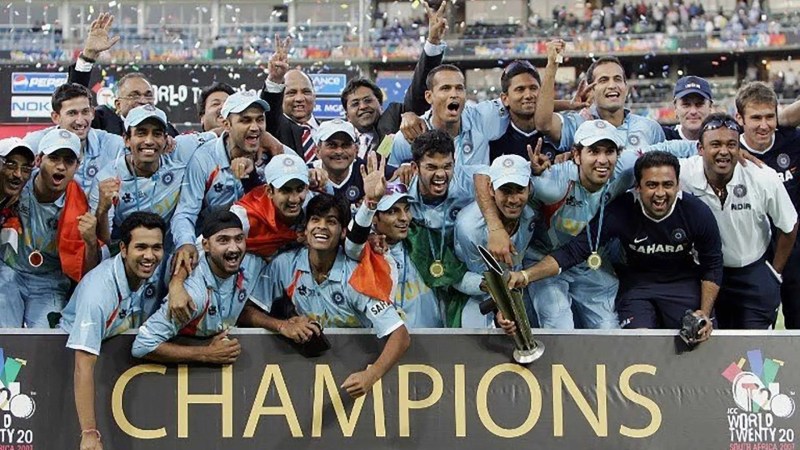
Gautam Gambhir became the top scorer for India in two major tournament finals – against Pakistan in the WT20 final in Johannesburg in 2007 and against Sri Lanka.
Who won the very first world cup, india won world cup 2011, who won first world cup, when india won world cup, india won world cup in which year, first world cup won by india, how many world cup india won, india won world cup, how many times india won world cup, india won t20 world cup, india won 1st world cup, last world cup won by india