Odi World Cup 2019 Winner – Results • Test Only • Wankhede AUS-W 219 & 261 IND-W (T:75) 406 & 75/2 India (W) won by 8 wickets Table Report Series
Abandoned • 4th Match • Super Smash • T20 • Wellington Wellock Match No Ball Bold Schedule Schedule Series Abandoned
Odi World Cup 2019 Winner

Result 3rd ODI Benoni SA-W 316/4 BAN-W(31.1/50 ov, T:317) 100 S Africa (W) won by 216 runs Table Report Series
List Of All ICC Cricket World Cup Winners (odi World Cup)
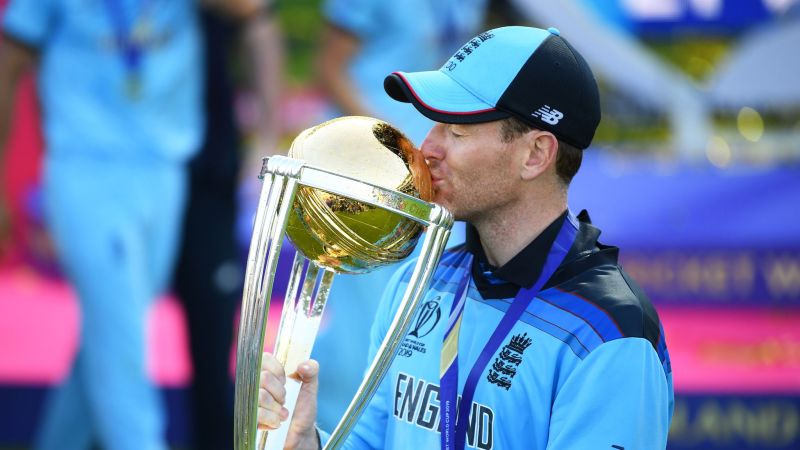
1 England; 2 New Zealand; 3= Australia, India On July 14th at 7.30 pm a strange sight occurred. As the golden midsummer sun filled the Lords with a glow fit for fairy tales, a man in blue slammed his fist into the emerald grass. He was delirious, the only outlet for ecstasy being the soles of his feet. Another crazy moment of the craziest of days. Jofra Archer faced more pressure than most will experience in a lifetime, and the stress was released. England restricted New Zealand to 15 runs after scoring 15 runs in their super. Tied after 100 overs, tied after two more. But another divider was clear: New Zealand hit 17 boundaries, England 27. The Lord was on his feet. In the 12th Test, England did something many thought would never happen. They won the World Cup. A few minutes later, Pawan and other heroes hit the stage. In the set of 242 runs, England scored 227 runs losing 8 wickets. The four-year spell came down to six balls and 15 runs. Fortunately, Ben Stokes was on strike. But he could not trust his new partner to drive the boundary that was the only path to glory and Trent Boult was denied two singles, announcing an off-side: 15 from four. On this stage, on this pitch, against this bowler, the action was immense. But Boult cuts his length and Stokes connects. The work, still great, was small. Then came the fateful – the cruelest – moment. Martin Guptill bowled the ball through deep midwicket as Stokes looked to dive forward to safety for an unfortunate but vital second. The ball flew off the bat and into the third man boundary for what The Times called “the miracle of the deflected over”. After consultation, the referee awarded 6 rounds. This, it seemed, was more a mistake than a miracle: by the letter of Deuteronomy 19.8, there should be five; Adil Rashid should have been on strike, needing four from two. But this happened in a parallel universe. In our case, something that looked like it should have been real, but, they only needed three: Stokes took two singles, twice lost a partner trying for a second, to set up the uberdrama of the super – and Archer struck. wormholes. If the climax of the finale justified every excellence, the previous exchanges were a little flat. The last day of the tournament, then, was the 2019 World Cup at Microcosm. In terms of fighters, it was the fewest since 1992 when there were nine. There were now ten, down from four in 2014-15, to allow for an all-play-all format. So full members Ireland and Zimbabwe dropped out, as did Scotland and the United Arab Emirates. It showed the true colors of the ICC: more keen to monetize big animals like India than promote the 50-over game. This structure guaranteed everyone, regardless of performance, at least nine fixations. The first was at the end of May and confirmed why England were favourites. They left South Africa with a familiar streak that included a Stokes catch so absurdly athletic it grabbed the front page headlines. The match also sparked a pair of rabbit races. One came off the second ball of the innings when Jonny Bairstow fell at Imran Tahir’s leg. Another time when England passed 300 for the fifth ODI in a row. Both were very easy to read. Spin played a weaker role over the next six weeks. And when the ICC announced its Team of the Tournament, the only slow bowler was Shakib Al Hasan, who took 11 for 86 for 606 while batting at No.5. Of the 29 bowlers who took at least 10, only 5 were spinners. India spinner Yuzvendra Chahal scored the most 12 runs. 17 seamers took 13 or more. Although many pitches took a bit of turn, it rarely defined the game. Another rabbit was a well-formed clan, a subject that could run and run – if not as some expected. Ahead of the tour, indiscreet India captain Virat Kohli joined the conversation about England chasing 500, further cementing the notion. More in mind games than reality. More intuitively, he predicted that as the pressure increased, the score would decrease. And then there were the grounds. The 2015 tournament was criticized for its 300-plus innings total and one-sidedness. Although the 11 venues used in 2019 all performed differently, the prepared surfaces under the watch of the ICC began to slow down. England and the crowd were used to low totals. Pitchers often lose speed during the game as well. During the first three weeks, a captain will usually send the correct calls; He broke the streak in just four of his first 21 complete games. Bowling at 10.30 in the Ashes and with the batsman knowing the shape of the chase – these were attractive options. Not that winning the lottery helped much: 11 times out of 21, it resulted in a loss. However, the first three weeks brought a clear pattern. With one exception – Pakistan’s loss to England – when India, Australia, England or New Zealand faced one of the other six, they usually won by comfortable margins. The tournament took on a mundane aspect, often undermined by acts of individual brilliance rather than memorable matches. Sheldon Cottrell’s boundary run to dismiss Steve Smith as Australia dug deep against the West Indies equaled Stokes’ stunning catch. The weather didn’t cooperate either. There were no spare days until the qualifiers – when New Zealand took advantage of a second-day match against India in the semi-final – and rain spoiled four group matches, making it the wettest World Cup ever. Another talking point was Zing Bells, who became friends with the batsman. Five times in the first 13 games they turned it on, only to be held. ICC said it wouldn’t change them, but strangely the ghost lights went off. But the biggest concern was reaching the group stages with a series of dead tyres. And then, on the summer solstice, England met Sri Lanka in Leeds. Even in a comatose lane, 99 out of 100 times the 233 target would be in range of the host. But this was the World Cup, Lasith Malinga opened up old scars, and confidence evaporated. It was just what he needed for the tournament, if not for England: one of the breakaway group was injured and the pack caught on. Now there was a sense of danger, and even though the Fab Four finally made progress, it was fun to get there in the end. Head hiccups forced a change in strategy. As the stakes got higher and the pitches got harder, so did the value of the runs in the bank. From the Australia-Bangladesh match in Nottingham on June 20 to the final, the skipper has opted to bat 18 times out of 23 overs, including the last nine. The results confirm the thinking: in those 23 games, the team that batted first won 17 times, with a tie. This shock of weakness was reinforced when England were crushed again by Australia at Lord’s. They had beaten three weak teams by batting first, but the chase – so long their modus operandi – was another possibility. An embarrassing win over the West Indies, defeats to Pakistan, Sri Lanka and now Australia. The last two unbeaten teams are India and New Zealand. It looked an awful lot like a crisis: a slip in any game could prove — indeed — terminal. England, who started the tournament at No. 1, briefly lost the top spot to India with their third defeat. The opening pair of Josan Roy and Bairstow was integral to their health. But Roy pulled a hamstring in the West Indies and the wheel came loose. Against India, England risked him even though he was not fully fit. He turned the team around and they inflicted their only defeat on India in the league stage. They had to do it all again against New Zealand – and they did. After winning the toss and batting twice, Morgan established his authority in the match with a stamp of 160 and 123 for the first wicket. In three matches with stand-in opener James Vince, Bairstow was cracked twice; Reunited with Roy, scored two centuries. It may have helped that he turned into a leather after a bit of understanding from Michael Vaughan: “People were waiting for us to fail,” Bairstow said. “They’re not willing to beat us… they’re waiting for you to lose this so they can
Next odi world cup, 2011 odi world cup, 2015 odi world cup, odi world cup 2019, odi world cup schedule, icc odi world cup 2019, icc world cup odi, odi world cup live, world cup cricket odi, world cup odi, world cup odi winners, odi world cup 2023