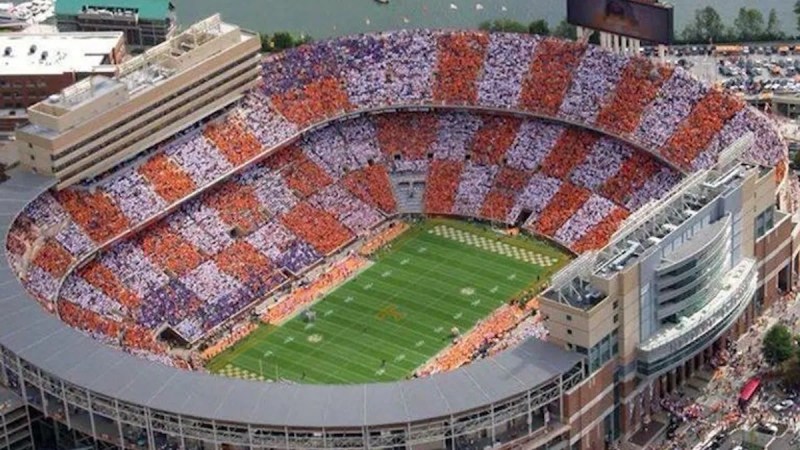
Top Stadiums In The World – We spend thousands to support our favorite teams. They collect tens of thousands and sometimes even thousands. international flavor When we want to root ourselves in size and historical significance. We have some impressive options.
Each of the 2,760 inflated ETFE foils can individually illuminate the exterior of Munich’s 71,000-seat Allianz Arena. Football teams such as Bayern Munich, TSV 1860 Munchen and the German national team, the $466 million bowling alley has attracted the most attention for its changing facade. Red to match the colors in the team. Can be illuminated in blue or white. This project by Herzog & de Meuron was inaugurated in 2005 and has been shining in Monaco ever since.
Top Stadiums In The World

What started in 1925 took on a completely unique form in the 1990s. The San Siro in Milan was first built in 1925 to hold 35,000 fans. A second phase was added a decade later; But the biggest change came in the 1990s, when the San Siro was converted into an all-seater venue. A third layer was added, requiring the addition of 11 concrete towers to the outside of the stadium to accommodate 80,000. The San Siro is unlike any other stadium in the world, with four towers at each corner forming the foundation of a new red beam roof for a visual spectacle.
Top 5 Fifa World Cup Stadiums
When the University of Michigan opened its new football stadium in 1927, it was an outrageous 72,000 for its time. Some 90 years later, it remains the country’s largest football stadium, and the Big House now seats over 107. 600 fans. Designed after the Yale Bowl, the original structure used 440 tons of reinforced steel and 31,000 square feet of chicken wire. Three-quarters of the building is underground, with an underground cistern (which swallowed a crane buried under the building) to compensate for the building.
For Europe’s largest stadium, FC Barcelona’s home ground seats 99,354 and some of the most interesting features are hidden within the structure. Opened in 1957, the venue was nicknamed Camp Nou (“New Ground”), which eventually became the official nickname for the 13.5-acre, 157-foot-wide concrete-and-iron structure. In addition to the famous red and blue interior colors, the stadium has a museum; It also includes television studios and a temple outside the tunnel that leads players to the playing surface.
What made the 2008 Beijing Olympic Stadium so famous was not the 80,000-seat concrete bowl, but the concrete surrounds and the unique structure that outdid the character of the stadium. Exterior steel defines the space. Designed by Herzog & de Meuron in collaboration with Chinese artist Ai Weiwei, the National Stadium features 110,000 tons of curved tiles imitating Chinese ceramics. Within 50 feet of the tub, the building facade is paired with colorful light displays, and the images are not specific.
As versatile as the Olympic Stadium, popularly designed for London in 2012, the Olympic Stadium is the lightest stadium of its size in the world: just 10,000 tonnes of steel; 50% recycled materials and lots of fabric for a lightweight roof. The 80,000-capacity venue was designed as a temporary Lego-style stadium, with plans to scale it down after the match. From 2016, the stadium will be the home of the 54,000-seat West Ham United football club. The comprehensive design of the London Olympic Stadium is a prime example of Olympic infrastructure done right.
Largest Cricket Stadium In The India
Ninety years of Portland’s history mingles with its modern lifestyle – food trucks. – One of the best combinations of old and new found in gyms. Built in 1926, the stadium was completely renovated to host MLS soccer in the Pacific Northwest. But the remake didn’t erase the old, leaving behind parts of the 20,800-seat 1926 stadium, including 90-year-old wooden benches in the fan section and parts of the original structure that once hosted Elvis concerts and the NFL. But the old concrete concourse is joined by a new front facade in steel and wood, adding an area for a mix of club spots and Portland food trucks to roam.
You can’t really talk about Texas without talking about size. And the Dallas Cowboys want it. The world’s largest pillar-free venue covers 3 million square feet, seats 80,000 and has the world’s largest glass doors: 180 feet wide and 120 feet high. Opened in 2009, the 292-foot-high roof above the field makes AT&T Stadium the world’s longest concourse at 660,800 square feet.
Forsyth Barr does what no other stadium in the world does: grow indoor stadium grass. The 30,000-seat stadium in New Zealand offers a fully transparent ETFE roof, keeping fans in an air-conditioned environment at all times, but still with natural grass for matches. The five-acre roof is 12 stories high and is supported by five arches, each 344 feet wide. In addition to natural lawns, The premier home of New Zealand rugby, Forsyth Barr offers all the amenities of a traditional stadium with a bit of transparency.

The appearance of Stadion Energa, which was inaugurated in 2011 for the 2012 European Championship in Poland, comes from 18,000 polycarbonate sheets. The plates, designed by Rhode Kellermann Wawrowsky, give the 41,600-seat building an amber look in six shades, linking the bowl’s shape to a mineral found along the Polish coast. The steel roof is supported by 82 steel frames, making it the largest free-standing structure in Europe, and you’ll find it lurking throughout the Stadion Energa.
Central Stadium (Yekaterinburg)
Its size makes the Maracana famous, but the added historical significance makes the stadium one of the most fascinating in the world. The design of Rio’s Maracana is a bit dull after being redesigned for the 2014 World Cup, but even when it’s partially finished, it still boasts more than 200,000 fans for the 1950 FIFA World Cup. The current 78,000-capacity stadium will host the opening ceremonies of the 2016 Olympics in August. Having hosted two World Cup finals and the Olympics, South America’s largest stadium takes on a rare historic atmosphere.
Sometimes nostalgia just needs a little recognition. Fenway Park in Boston deserves to be the oldest professional stadium in North America. Built in 1912, the baseball field off Lansdowne Street is synonymous with summer. Its famous Green Monster left field wall has defined ballpark weirdness for decades. More than 37 feet high and 231 feet long across Fenway Park, the wall began as an embankment to block views of the outside of the park. The wall itself has come in a variety of sizes and materials, from wood to concrete to plastic, but has always helped make Fenway Park one of the most recognizable stadiums in the world.
Replacing the famous Wembley Stadium, which opened in 1924, was no small task in 2007, but the new Wembley brings it’s own identity. The most notable feature is the 7,840-ton steel roof structure, which eliminates the need for poles and includes a 436-foot-tall steel arch to support the retractable section. At 1,033 feet long, it makes it the longest roof in the world at over 11 acres, with four of the four retractable roofs. Designed by Lord Norman Foster, Wembley is the second largest stadium in Europe with a capacity of 90,000.
You won’t find many acrylic glass canopies; They certainly won’t be available at the Olympiastadion in Munich. Built for the 1972 Olympics, the 70,000-seat facility was built in a crater created by bombing during World War II. Using the earth as a key aspect of the exterior design, the immersive nature of the stadium, the integrated glass and cables provide a never-before-seen look that has not been replicated since.
The Biggest Stadiums In The World
The 2012 UEFA European Championship gave Poland new stadiums. The 58,000-plus capacity national stadium opened in 2011 with a distinctive wire mesh facade painted in Polish red and white. But the uniqueness doesn’t stop there. A retractable PVC roof extends from an arrow suspended in the center of the field. Spiders and cables around the hall reinforce the partially transparent roof and increase the visual appeal of the arena.
Even before the game of tennis became all the rage, Qi Zhong Forest Sports City Arena built a replica in 2005. The 14,000-seat central courtyard has an octagonal roof, shaped like the city’s symbol, a magnolia flower. . surrounded.
Top ten stadiums in the world, big stadiums in the world, top soccer stadiums in the world, top 10 sports stadiums in the world, top ten largest stadiums in the world, stadiums in the world, top 10 beautiful stadiums in the world, top cricket stadiums in the world, top 10 soccer stadiums in the world, top 5 stadiums in the world, top 10 largest stadiums in the world, top 10 cricket stadiums in the world