What Is The Full Form Of Dls In Cricket – In the game of cricket, the weather can sometimes play spoilsport, causing interruptions or even cancellations due to rain. To ensure fairness and maintain the excitement of the game, the Duckworth-Lewis Method (DLS) was introduced. Developed by Frank Duckworth and Tony Lewis, this mathematical formula revolutionized the way rain-affected matches were determined. In this article, we will explore the intricacies of the Duckworth-Lewis Method, examine the statistics, rules, and new rules for rain-affected games in Nepal, brought to you by Mostbet, the leading online casino and sports betting platform.
The Duckworth-Lewis method was first used in international cricket in 1997, aiming to provide a fair system for deciding revised targets in rain-affected limited overs. The method looks at various factors such as the number of overs lost, the number of wickets fallen, and the batting average of the team leading. Using these parameters, the DLS system tries to establish a fair target for the second batting team, ensuring an exciting competition without the interference of the weather. Stay tuned to Mostbet (https:///en/) to see the exciting results of rain-affected games under the Duckworth-Lewis Method.
What Is The Full Form Of Dls In Cricket

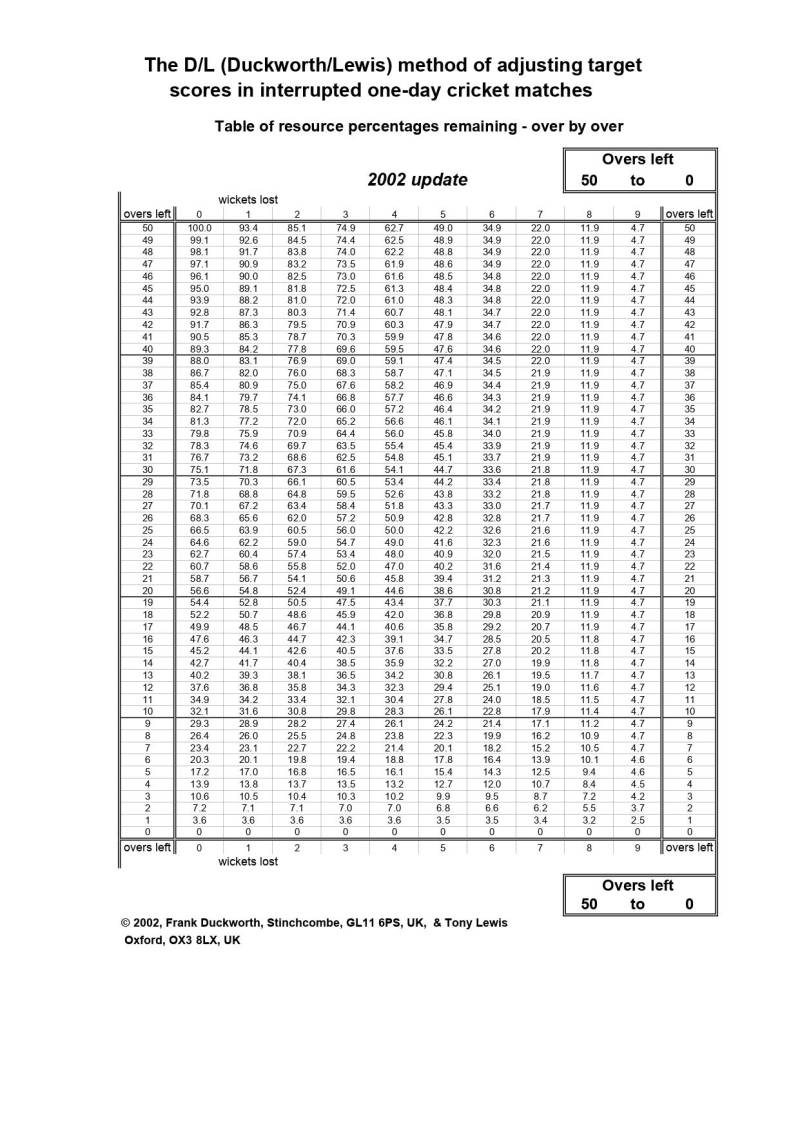
The Duckworth-Lewis Method uses a complex mathematical formula to determine the revised target based on the number of overs lost due to rain. The calculation process includes two main steps: the calculation of the initial percentage of the resource and the calculation of the target score.
Sem, Dls (a), Afm (b) And Arrangement Of Nanosphere(c) Images Of The…
The first serve percentage is calculated by considering the number of overs lost and the current batting average of the team batting first. Shows the ratio of resources available in the second-hit group compared to the first-hit group.
With the use of first serve percentage, the target score is determined based on the parity score, which represents the number of runs the batting team would have been expected to score if there had been no interference. The target score is set based on the number of overs available to the team that wins second, ensuring a fair chase.
Stay up-to-date with updated goals and statistics under the Duckworth-Lewis Method by visiting Mostbet, your trusted site for online casinos and sports betting in Nepal.
To illustrate the application of the Duckworth-Lewis Method, let us consider a hypothetical situation where Team A scores 250 runs for 4 wickets in 40 overs before the rain stops. Team B was given a revised target after losing 5 overs due to rain.
Full Article: Transient Electromagnetic 1d Inversion Based On The Pso–dls Combination Algorithm
The Duckworth-Lewis Method, using its calculations, determines that Team B has 80% of the resources available compared to Team A. Therefore, the revised target for Team B is 200 runs (80% of 250) . However, since Team B lost 5 overs, the target was adjusted based on the remaining resources.
If Team B has 30 overs left after the rain stops, the target will be reduced to one board. For example, if they have 30 overs left outside the first 50, the target is recalculated as 120 runs (60% of 200).
Track updated targets and follow the nail-biting action of rain-affected matches by placing your bets on Mostbet, Nepal’s leading online casino and sports betting platform.

Over the years, the Duckworth-Lewis Method has faced some criticism regarding its complexity and potential for inaccuracies. As a result, the International Cricket Council (ICC) made changes to the original formula to address these concerns.
Dls Circle Letter Logo Design With Circle And Ellipse Shape. Dls Ellipse Letters With Typographic Style. The Three Initials Form A Circle Logo. Dls Ci Stock Vector Image & Art
A recent update, known as the Duckworth-Lewis-Stern (DLS) method, was introduced in 2014. The modified method looks at the service percentage at the start of each over, making it fairer for the chaser. team in rain-affected games.
The ICC has also introduced additional safeguards to reduce the impact of changed targets, such as ensuring a minimum number of overs for a result and enforcing a target-fixing limit. These measures aim to strike a balance between maintaining fairness and maintaining the integrity of the game.
Stay informed about the latest updates and Duckworth-Lewis Method updates with Mostbet, the top online casino and sports betting site in Nepal.
The Duckworth-Lewis Method has become a part of cricket, ensuring good results in rain-affected matches. Statistics and modified goals play an important role in keeping the game exciting and competitive. Stay connected with Mostbet, the leading online casino and sports betting platform, to see the exciting changes in rain-affected cricket games in Nepal.
Choosing The Concentration Range For Dls Size Measurement
No, the Duckworth-Lewis Method is used in limited overs cricket formats, such as One Day Internationals (ODIs) and Twenty20 (T20) matches. It is usually not used in test matches, as the duration allows more flexibility in making up for lost time.
The Duckworth-Lewis Method is designed to deal with rainfall disturbances. However, if the match is affected by poor lighting or other factors, the match officials may use the updated target calculation method based on the missing equipment. The specific request may vary depending on the playing conditions and the discretion of the officials What is the Duckworth-Lewis-Stern or DLS Method in cricket? When and why was the DLS method or the Duckworth-Lewis-Stern method introduced? Why is it used in cricket to manage rain stoppages in one-day matches?
Sri Lanka’s Dasun Shanaka looks on as rain clouds gather over the ground during the fourth ODI against England in Kandy on October 20, 2018.

The story so far: Rain played spoilsport in the 2019 International Cricket Council (ICC) England and Wales Cricket World Cup, canceling several matches, including India’s clash with New Zealand. As wet weather continues to affect games, the Duckworth-Lewis-Stern (DLS) method has become more prominent in the tournament.
Submit form to be considered for employment
The Duckworth-Lewis-Stern or DLS method (as it is now known) is a statistical system used to calculate target scores and achieve results in rain-limited matches. Designed by English mathematicians Frank Duckworth and Tony Lewis and originally developed by them, it was first used in 1997. Australian academic Steve Stern revised the formula, becoming its guardian before the 2015 World Cup; his name was added to the title.
Having a fixed date for a limited overs game and continuing the next morning seems ideal, but the planning and scheduling of challenges means this is not always possible. That’s why the managers of the game worked for a long time to find the right way to solve the problems of a day affected by rain. If a match is interrupted by bad weather, and one or both teams do not get their full number of overs, the result must be achieved in the time available after the restart of the game. What any number does is try to fix the target score depending on the reduction of overs. Any number is an estimate: there is no right answer. What the ICC is trying to do is arrive at a formula that takes into account as many parameters as possible, and accurately reflects the efforts of both teams. The DLS system, which has been modified several times, is generally considered the most accurate system used in international cricket.
When ODI cricket was first played, the Average Run Rate (ARR) was used to calculate the target. Here, the chasing side simply matches the pace of the opponent. For example, if Team A scores 200 in 50 overs, with a run rate of 4, and if Team B’s innings is reduced to 30 overs, the total win will be 120. But this method ignores the wicket lost, or the fact that it is easy to maintain a good run rate over a small number of overs. So if Team A makes 200 in 50 overs of batting and Team B makes 100 in nine overs in 20 overs when rain ensures that no more play can be played, the latter will be declared the winner. That is why the ARR method is biased towards the second team batting.
Australia developed an alternative ARR method before the 1992 Cricket World Cup, called the Most Productive Overs (MPO) method. It involves reducing the target by the number of runs scored by the team in the least productive overs, which is equal to the number of overs lost. For example, if Team A scores 250 runs in 50 overs and Team B’s innings is reduced to 30 overs, the total available is the total number of runs scored by Team A in the longest overs. this. -30. Here, Team B had a real reason to complain as their best 20 overs bowlers were ignored. For argument’s sake, if Team B won 20 overs and conceded 250 runs in the other 30 overs, their 30 overs target would be 251. So Team B is penalized for bowling lower runs. overs. Obviously, this method tends to hit the side first.
Dls Method In Cricket Full Form
Its flaws were highlighted in the 1992 World Cup semi-final between England and South Africa. Chasing England’s 252, South Africa were 231 for six and needed 22 from 13 balls when rain stopped play for 12 minutes. Two overs lost and thus the lowest score of two overs – conceding one run in total – in England’s innings bowled
Full form of lbw in cricket, what is the length of cricket pitch, what is dls method in cricket, what time is the cricket, full form of cricket, what is the name of the cricket in mulan, what is the cricket number, what is the weight of cricket ball, dls method in cricket, what is the game of cricket, what is the cricket, tbc full form in cricket